 Made in Humane Club
1. District Kargil, Ladakh
Such a privilege to carry out vitamin A distribution to children in Kargil, and treat malnutrition in pregnant women and nursing mothers! Every Infant Matters is grateful to Mr Santosh Sachdeva, District Collector Kargil, and to the donor unnikrishnan ts and Swarnima Tamang and GREAT EASTERN FOUNDATION who are supporting a large scale 2 year project covering the entire district.We work in all 6 blocks and 127 villages, going right up to Indo-Pakistan border. Kargil is an bitterly cold area, sparsely populated with tribals. There is a severe problem of poor health infrastructure and shortage of medical personnel. We have delivered 1,75,000 Vitamin A doses to tribal children 0-5 years. Our other activities include antenatal care, health camps, training of 852 ASHAs and other government workers, and anemia testing and treatment.
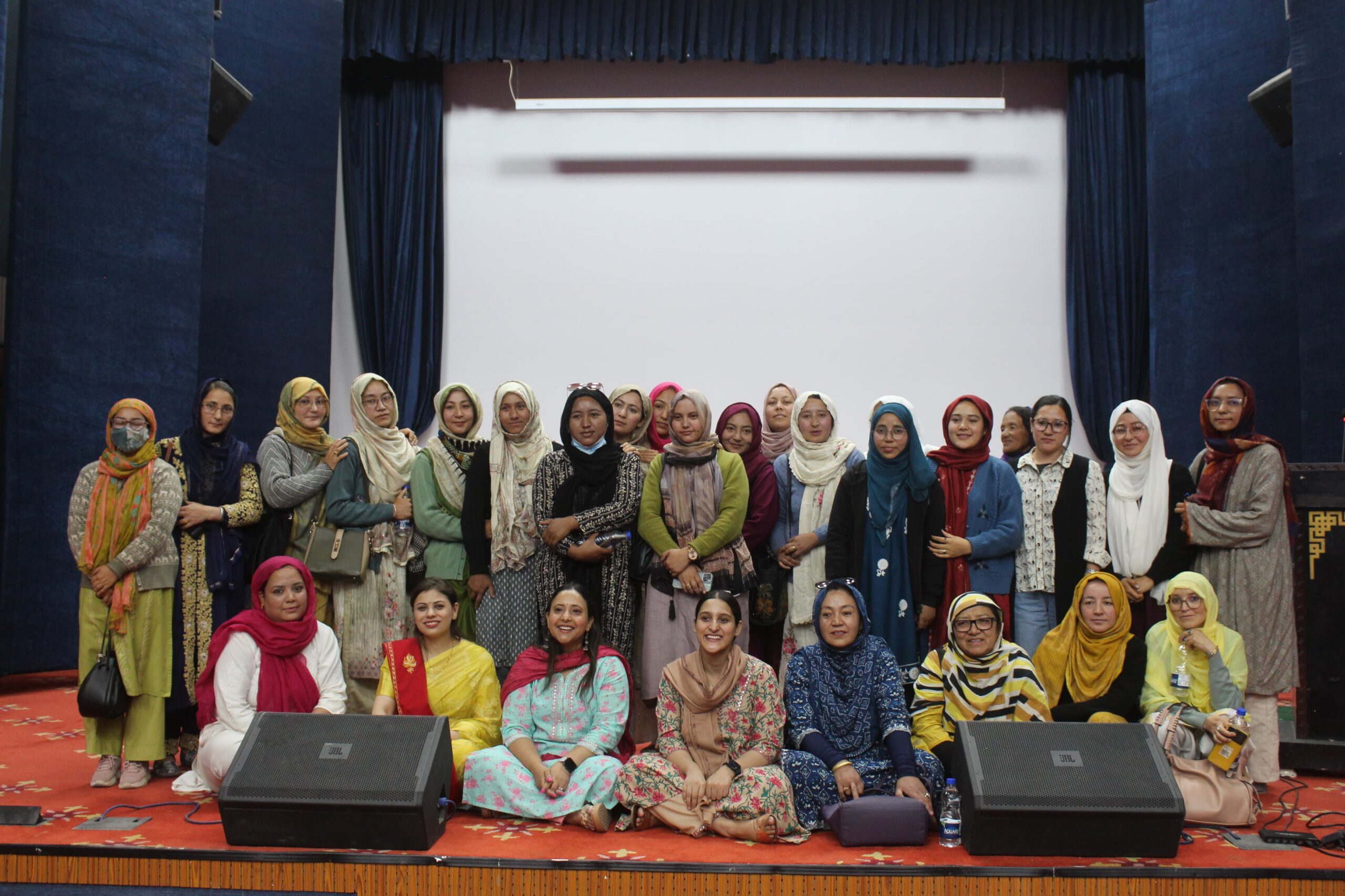
High in the rugged Himalayas, at over 8,000 feet above sea level, lies Kargil—a breathtaking region known for its bravery, resilience, and stunning landscapes. But behind its natural beauty is a quieter, urgent story: the health challenges faced by communities living in one of India’s most remote districts.
At Every Infant Matters, our work often brings us to places where healthcare access is not a given but a daily struggle. Kargil is one such region where the terrain, climate, and limited infrastructure pose unique barriers to health and well-being—especially for infants, children, and women:
1. Geographic Isolation and Harsh Terrain
Kargil’s mountainous terrain makes mobility extremely difficult. Several villages remain cut off for months during winter. Reaching the nearest PHC or district hospital can take hours—sometimes requiring travel by foot across icy slopes.
For pregnant women, children with fever, or patients with chronic conditions, this delay in care can be dangerous or even fatal.
2. Limited Healthcare Infrastructure
While the district has hospitals and sub-centres, the shortage of specialist doctors, trained nurses, and diagnostic facilities continues to be a major challenge.
Simple lab tests, emergency obstetric care, and neonatal services are often unavailable locally, forcing families to travel long distances to Leh or Srinagar—an option not always feasible.
3. Maternal and Child Health Vulnerabilities
Expectant mothers face multiple risks:
Limited antenatal and postnatal care
Inadequate nutrition and anemia
Difficulties reaching a healthcare facility during labour
Lack of emergency neonatal care, which is crucial in high-altitude pregnancies
Infants, too, are vulnerable to low birth weight, respiratory issues, poor immunization coverage, and malnutrition, especially during winter when food supply becomes restricted.
4. Harsh Winters and Seasonal Blockades
Temperatures in Kargil can dip below –60°C. Winters bring road blockades, supply shortages, and disruption in healthcare outreach.
Immunization teams struggle to maintain vaccine cold chains. Families often run out of essential medicines.
For children, respiratory infections spike dramatically during these months.
5. Mental Health: An Underrated Crisis
Living in remote, conflict-affected, and climate-challenged spaces takes a toll.
Youth face stress due to limited education and employment opportunities.
Women carry disproportionate emotional burdens, balancing household responsibilities with limited support systems. Yet mental health services remain nearly non-existent.
We are proud of our partnership with the Great Eastern Foundation that has enabled us to provide the much needed mother and child care in Kargil.
On the frozen mountain slopes of Kargil, community health workers of Every Infant Matters brave the snow and bitter cold to serve marginalised tribal women and children living close to the Indo Pakistan border. “These are our foot soldiers. The exemplify courage and Sewa, service to the nation,” says Dr Radhika Batra, who has dedicated her life to fighting malnutrition and it’s horrifying side-effects: permanent blindness due to vitamin A deficiency.
Health workers closely in partnership with the government. They go door to door with Asha workers, they work in the government health centres, and they reach the most marginalised of all in Anganwadi Centres and social religious Centres,. They carry out deworming and distributing of vitamin A to save lives of children and to save children from becoming blind. They also carry out screening of hashtag#anaemia and malnutrition in teenage girls and pregnant women and carry out hashtag#nutritional counselling, and distribution of protein supplements. This holistic approach actually prevents hashtag#vitaminA deficiency in hashtag#newborn children.
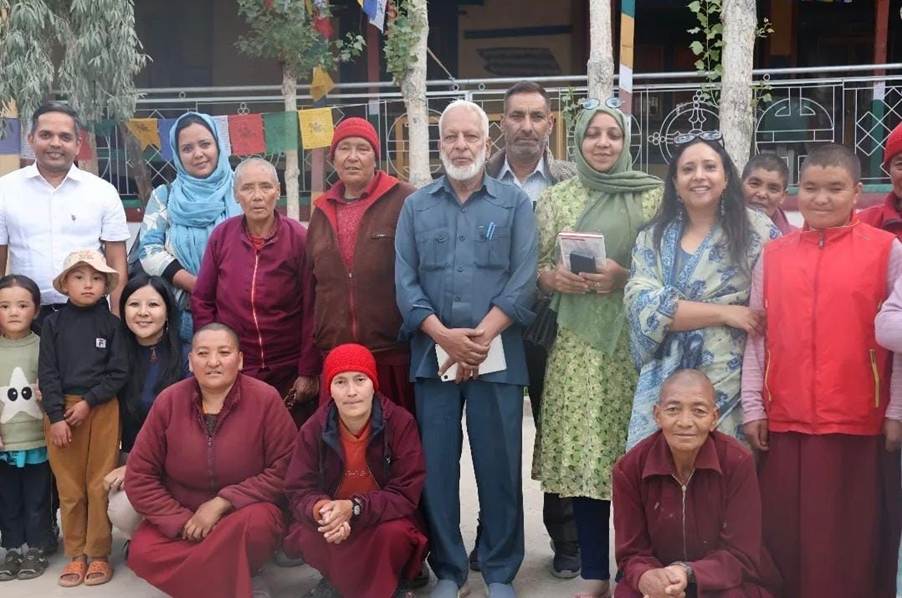
Working in Monasteries in Kargil: At a height of 9000 feet above sea level in village Mulbekh, district hashtag#Kargil, hashtag#Ladakh, there is a Buddhist monastery known as the Jangchup Choeliny Buddhist Nunnery.
A team of doctors and psychologist from Every Infant Matters visited this monastery last week to provide personalised hashtag#healthcare to female Buddhist nuns, who live cloistered from the world, spending their lives in contemplation, meditation, and prayer. Though we had held a health camp in Mulbekh village nearby, the nuns were unable to visit the camp.
Since the older female chomos (female lamas) of the monastery could not attend the camp due to their age, they requested that the doctors visit the monastery instead. Accordingly, we went to the monastery where the doctors carried out health check-ups. The issue concerning the patients was also addressed in the presence of their parents, who were counseled as well. Parents of other patients with psychological concerns also received counseling.
The donors were warmly welcomed by the senior ladies of the monastery, given a tour of the premises, and introduced to the community. Additionally, hemoglobin testing for all 30 members of the
Our Impact:
- delivered Vitamin A to 1,75,000 children
- Delivered 72,000 deworming tablets.
- Screened 3,000 children for malnutrition and distributed protein bags.
- Screened over 6,000 women for anemia
- Counseled pregnant and lactating mothers, distributing protein bags.
- Partnered with the government to prevent anemia by distributing Iron-folic acid tablets.
- Comprehensive training of 852 ASHA workers, pharmacists and community health officers.
- Achieved zero maternal and infant mortality.
2. Nandghars in Rajasthan
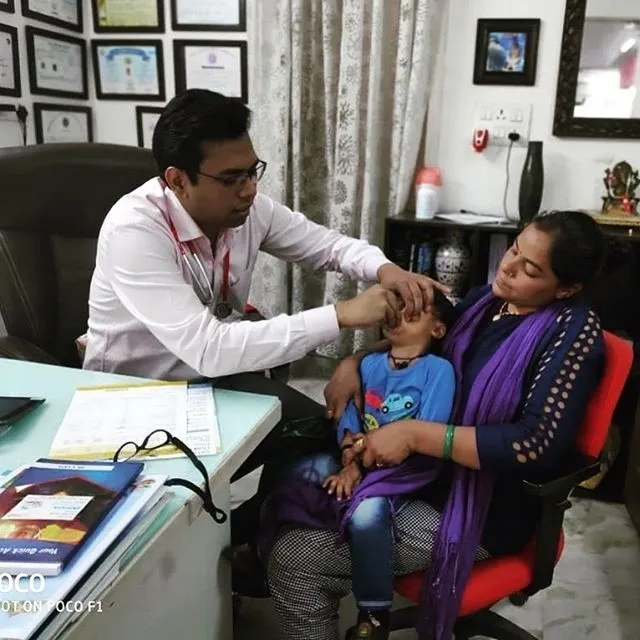
Selected by the Anil Agarwal Foundation to provide health, nutrition, and anemia testing in 300 Nand Ghar’s in Rajasthan. The Anil Agarwal Foundation has transformed traditional government Anganwadis into modern, state-of-the-art hubs for education, healthcare, nutrition, and women empowerment. We are starting in District Kota, Rajsathan, and pleased to say that we have recieved full support from the District Collector, Chief medical Officer and other officers .
Strategic Objectives of partnership: To enhance community health outcomes through targeted interventions in Nandghars:
- Anaemia Screening: Conduct comprehensive screening across 300 Nand Ghars over a one-year period.
- Integrated Health Camps: Facilitate specialized camps focusing on hygiene, handwashing, nutrition, and gender equality.
A day in Nandghar: what does it look like?
The day before: A day in Nandghar actually begins the day before. Prior to the visit to the Nandgarh, our CHWs (Community Health Workers) will visit the neighbourhood on the prior day, and inform everyone in the community that they must visit the Nandghar next day. The mothers and children are all welcome as we are carrying out of Health camp. The message given will be as follows: ‘Tomorrow we will be carrying out community health activities for your children. We will test we will find out if they have nutritional deficiencies. We will also carry out interactive activities in a manner so that the children are happy to learn and imbibe key messages. If you have any questions, we have a panel of senior doctors who will answer your questions regarding pregnancy, immunisation, nutrition, and daily childhood problems.’
Next Morning: The team visits the designated Nandghar for that day. They arrive at 10 AM and greet the mothers and children.They put up the banners on anaemia,testing and health camps.
They explain the proceedings for the day. They start by carrying out a demonstration of the haemoglobin testing using a non-invasive haemoglobinometer. Before testing for children they will explain the process. They will demonstrate how the testing will be done, just by putting a finger on the machine and show how easy and simple and painless the processes. Then they will carry out haemoglobin testing of women and children. In real time, we get the results, so the targeted counselling can be given to anaemic patients.
The next process will be the Health education and awareness camps. Our team will carry out health education on a variety of subject, such as:
- What is good food and bad food?
- How should handwashing be done?
- How to maintain good hygiene
- The importance of exercise
- Those children who have got anaemia, what special precautions should be taken for them?
- Advice on nutrition for growing children, pregnant women and nursing mothers.
Our team will carry out Health promoting games.( For example, raise your hand if you know the answer)The aim of carrying out the games and intersperse fun activities among the talks is to make it interesting and interactive so that there is maximum participation and enjoyment of children.After completing the Health camp, the team will say goodbye and thank the Anganwadi worker and co-ordinator, and next they visit the neighbourhood where the next Nandghar is located, to carry out community mobilisation for maximum attendance on the next day.
3. Baramulla, Kashmir
Every Infant Matters distributes Vitamin A and Deworming to 10,000 school children. It continues its fight against malnutrition and its serious consequences. We are working in the schools of Baramulla, Kashmir, fighting malnutrition in children, preventing one of the most horrifying consequences of hunger, that is permanent blindness due to vitamin A deficiency. We join hands with the National Health Mission, government of India, in villages of Block Sopore, District Baramulla, to implements its projects in government schools in the village Wadoora Tehsil Dangerpora and Higher Secondary Schools in Jammu & Kashmir. Now this programme is being held continuously in all blocks in district Baramulla.
“We celebrate inclusion and diversity”, says Dr Radhika Batra. We are proud and honoured to be working in Kashmir and shall leave no stone unturned to scale our project in this area.”
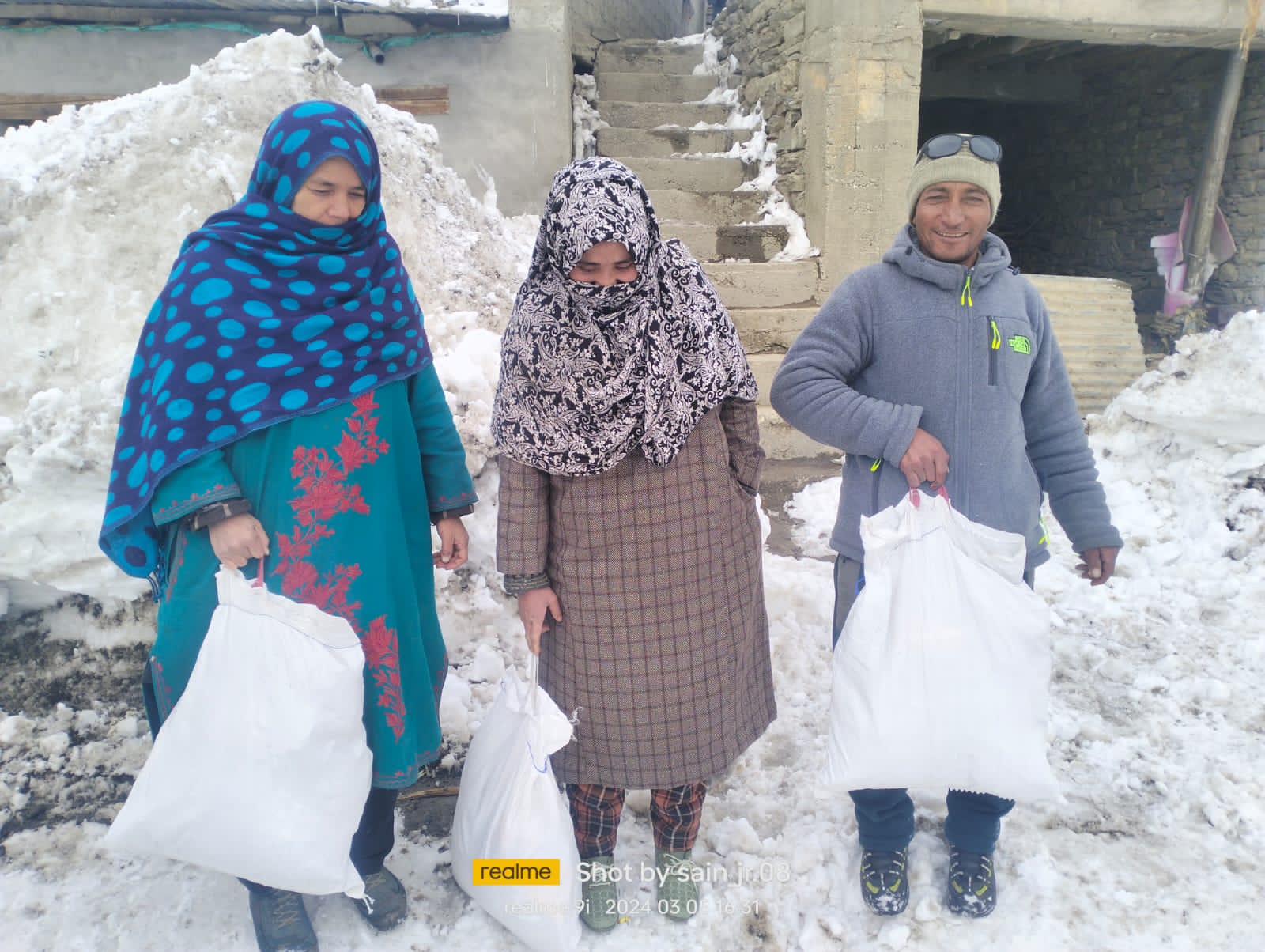
Our biggest support comes from the local communities themselves. More than 60% of our volunteers and frontline workers belong to marginalised communities, minorities, backward classes and castes.
In one of the schools, Miss Tanveera, the Block Coordinator NHRM delivered a lecture regarding Health and hygiene, giving advice to pregnant mothers who should eat a balanced diet and drink plenty of liquids. She also advised women to start breastfeeding shortly after delivery in order to promote lactation. This was folllwed by giving Vitamin A supplements and deworming tablets to children 0-5 years.
The Principal of Higher Secondary School Dangerpora Gh Nabi Sumji Sahib delivered a lecture regarding Albendazole. She said that we must reduce the prevalence of worm infections among vulnerable children in order to build health and improve school performance.
In another school, the program started with an awareness speech delivered by Dr Hilal, Director of WHIPRO, who briefed the participants including the students and faculty members and non teaching staffs about the importance of vitamin A and Deworming.
Mr Javid Ahmad, DDC member of Dangerpora Block Sopore was the Chief Guest and gave the keynote speech at the health camp for free distribution of vitamins supplements and deworminig of children.
The participants included FMPHWs, Ashas,Health Workers, Educations department dignitaries and many others.
BDC Member Mr Shabir Ahmad expressed his gratitude to Every Infant Matters and its President Dr Radhika Batra.

4. Silvassa
A myriad of health promoting activities for tribal and villagers since 3 years include anemia detection and treatment, providing safe water, counseling and awareness on nutrition and hygiene.
5. Madhya Pradesh
honoured that Every Infant Matters is one of the 4 NGOs- and the only one working in health and nutrition, to be selected by the District Magistrate Vidisha in Madhya Pradesh to work in Lateri, one of the most underserved blocks in MP that has the worst health indicators in women and children.
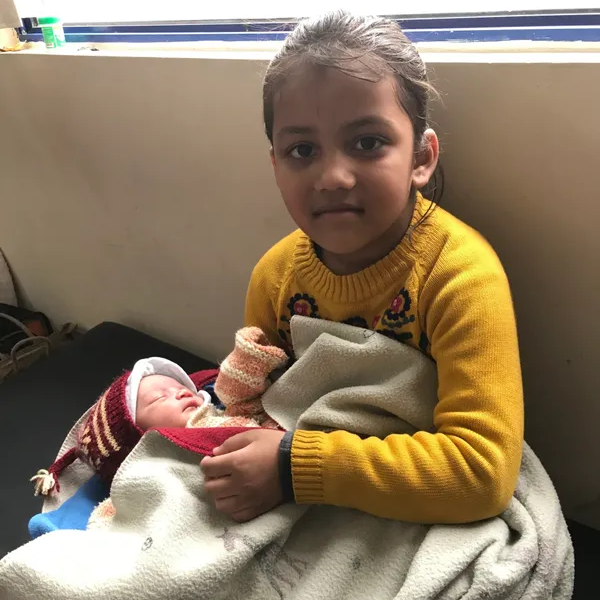
Our dedicated team goes from village to village, from Ward to Ward in block Lateri, carrying out a myriad of activities to promote nutrition, prevent anaemia, improve well-being, and save lives. Training of government Asha workers goes on in block Lateri, district Vidisha, one of the aspirational districts of the NITI Aayog. Every Infant Matters is carrying out vitamin A supplementation, deworming, promotion of breastfeeding and immunisation, and nutritional counselling for tribal communities here, in partnership with the government and with SVP India.
Our flagship project remains hashtag#VitaminAsupplementation for marginalised and malnourished hashtag#children, in order to save them from permanent blindness and premature death.
Health workers use EzeRx, a non-invasive handheld , point of care device to test haemoglobin. This has been approved by the government of India and Indian Council of Medical Research (ICMR). The device has been benefits. No blood sample is required. Results are available immediately. Treatment can be started without any delay. There are no human errors. And most importantly, data fudging cannot take place at all.
We have started vitamin A supplementation, deworming, and haemoglobin testing in the following locations:
1. The NRC (Neonatalogy resuscitation Ward) in the district Hospital, where they treat children with severe acute malnutrition.
2. Church and socio religious centres (many of the tribals belong to the church)
3. Anganwadi Centres and government schools
4. Going door-to-door within the tribal areas.
We think the government of Madhya Pradesh, specially the DC (district collector) of Vidisha for their trust and belief that we can make a difference in the lives of the people who live here.

6. West Bengal
Supported fully by SVP India (Social Venture Partners), we have distributed Vit A and deworming to 175000 children in phase I and 75,000 children in phase 2, working in Kalimpong and darjeeling, going right upto the Indo Bhutan and Indo Nepal borders. Health workers faced severe challenges of rough terrain, landslides, torrential rains broken roads and bridges yet continued with determination.
High in the mountains of Kalimpong, just 1 km before you reach the Indo Bhutan border, there is a small church, half hidden in the Mountainside. Workers of Every Infant Matters, all local people, mostly women from tribal and backward communities, carry out vitamin A supplementation of children 0 to 5 years and deworming of teenagers and children, both government programmes that must be implemented.
“We choose to work in the most challenging geographies,” says Dr Radhika Batra. We work in places such as Bansbotay ICDS (Integrated Child Development Scheme) Center in District Darjeeling, West Bengal, in partnership with the government. When you go further north from Darjeeling, the road peters out into a dust track. Torrential rains and landslides in the past several weeks have completely destroyed the road. But our health workers forge ahead unfazed by the inclement weather or adverse geographical conditions.
7. Sikkim
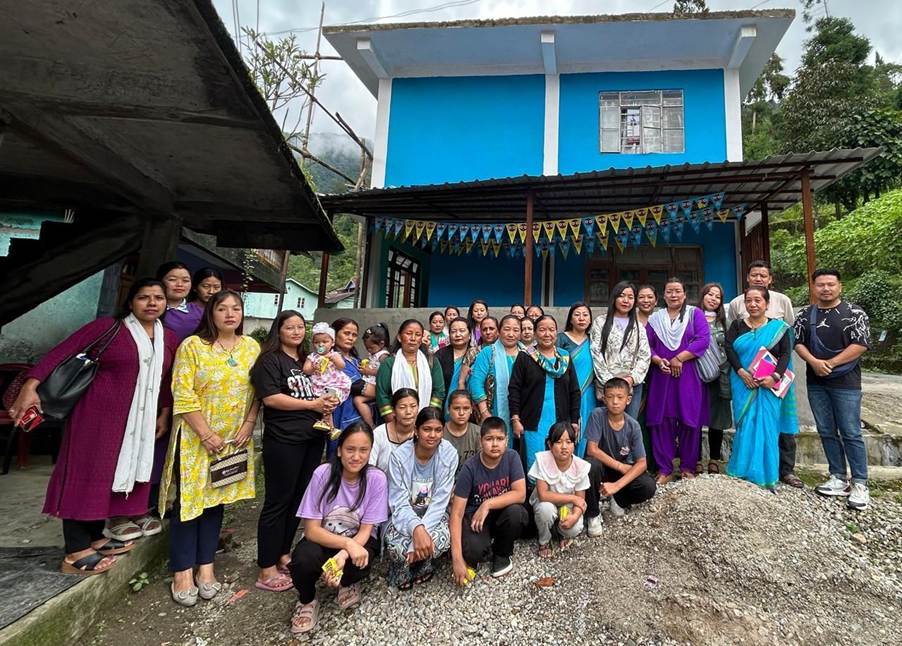
Partnered with the National health Mission and Project ECH to train ANMs on safe motherhood, neonatalogy and resuscitation. This year we partnered with ONGC to provide life saving equipment to STNM hospital, the biggest public hospital in Sikkim
8. Anemia Mukt Bharat
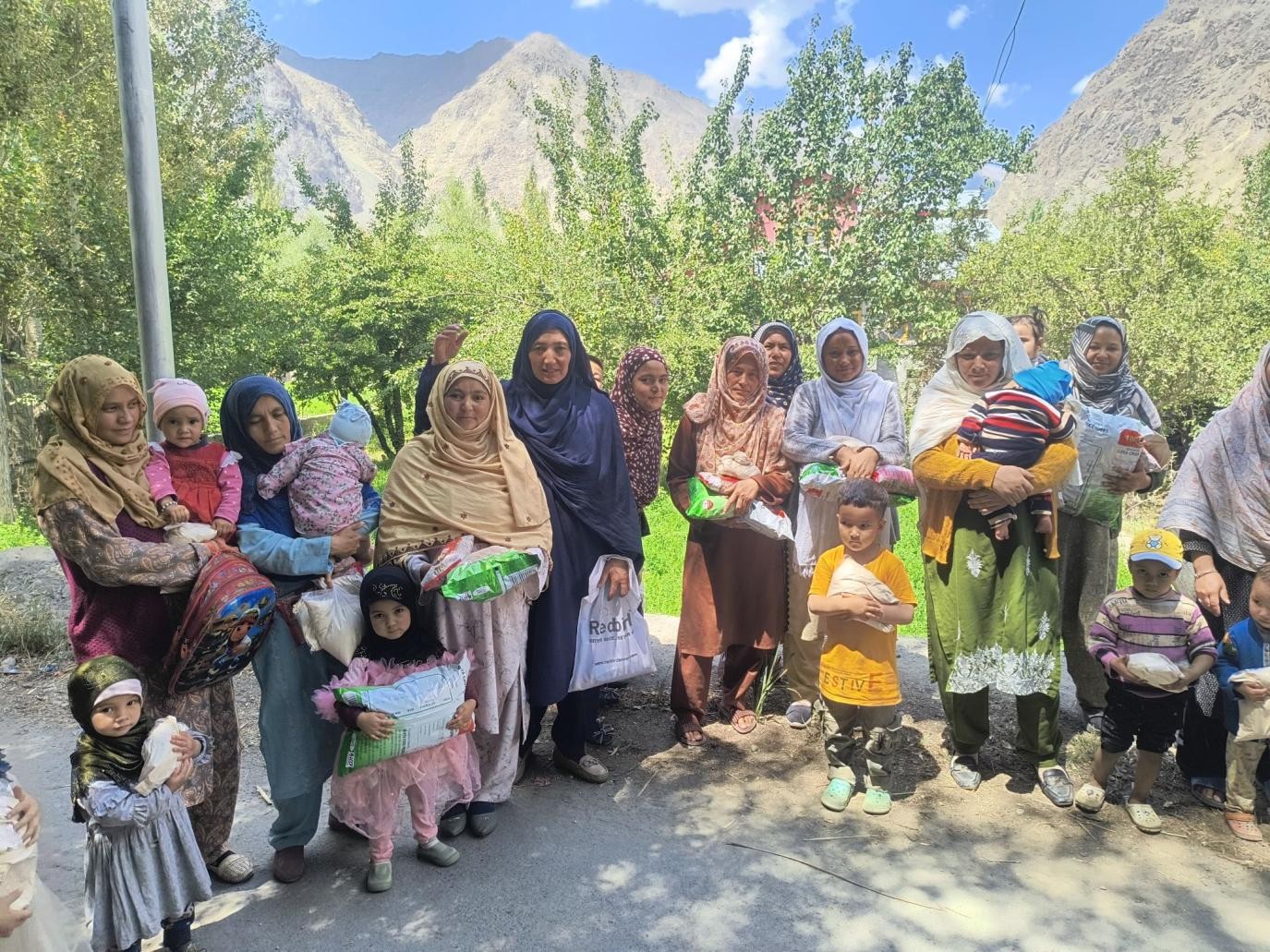
We partner with the government for an Anemia-free India, doing anemia detection via EzeRx, a non-invasive hand-held , point of care device, serving tribals in Kargil, Madhya Pradesh, Rajasthan and Silvassa, serving tribal communities. Health workers use EzeRx, a non-invasive hand-held , point of care device to test haemoglobin. This has been approved by the government of India and Indian Council of Medical Research (ICMR). The device has manifold benefits. No blood sample is required. Results are available immediately. Treatment can be started without any delay. There are no human errors. And most importantly, data fudging cannot take place at all.
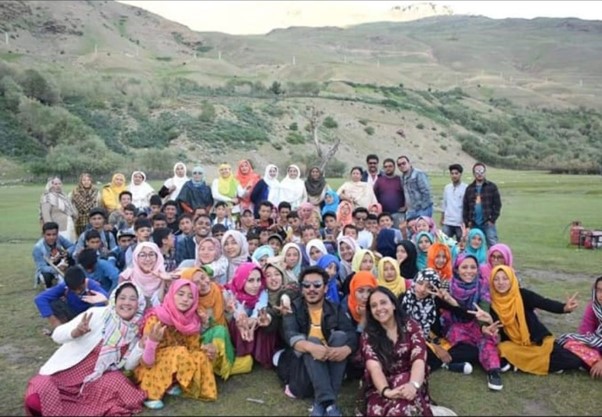
9. Health Camps in Drass
Beginning July 2025, we carried out a series of one-off health camps in Kargil where we sent a medical team to provide medical care, mental health screening and counselling, training of government staff, and teleconsultation by specialists. The need is evident; Kargil has only 7 doctors, 125 positions of doctors are lying vacant, there is no one to provide medical care. There are no private doctors nor quacks nor chemist shops around. There are no practitioners of indigenous systems of medicine.
Revising strategy: After carrying out health camps in various parts of the district, we decided to have a structured approach by covering one block at a time with the aim of reaching every village.We started with Drass where the cold spell in the winter months is brutal. Drass is the coldest inhabited place in India and the second coldest in the world, and therefore we selected this as our first block. Block Drass spans an area of 2114 km², and has 27 official villages, each having a population of few hundred to 2000 people, as well as several unnamed small villages on mountainsides. Poor roads and poor infrastructure compound the problem. This is one of the sensitive areas of the government and we have had to obtain special permissions to carry out health camps in this area, as mobility is restricted. Many people in Drass have never visited a doctor or even seen a doctor in their entire lives. There is only one government doctor for the entire block, the Block Medical Officer, who moves between Srinagar and Drass.
The Two fold model:
- The Hub and Spoke model: here the health camp is held in the hub village. The spoke villages are accessible villages where we popularise the health camp in the days prior, and encourage villagers to attend and participate. The camp is held in government premises, either the PHC (Primary Health Centre) or the sub centre.
- Satellite camps: These are mobile camps held after the main camp in far off villages using the mobile medical team. Some of the villages are totally inaccessible. There is no connecting road. Some of these villages are unnamed or called mohallas as there is just a cluster of houses on the mountainside. These camps are held in very basic conditions, often in the open air, as there is no dedicated space or even a table and chair for the team.
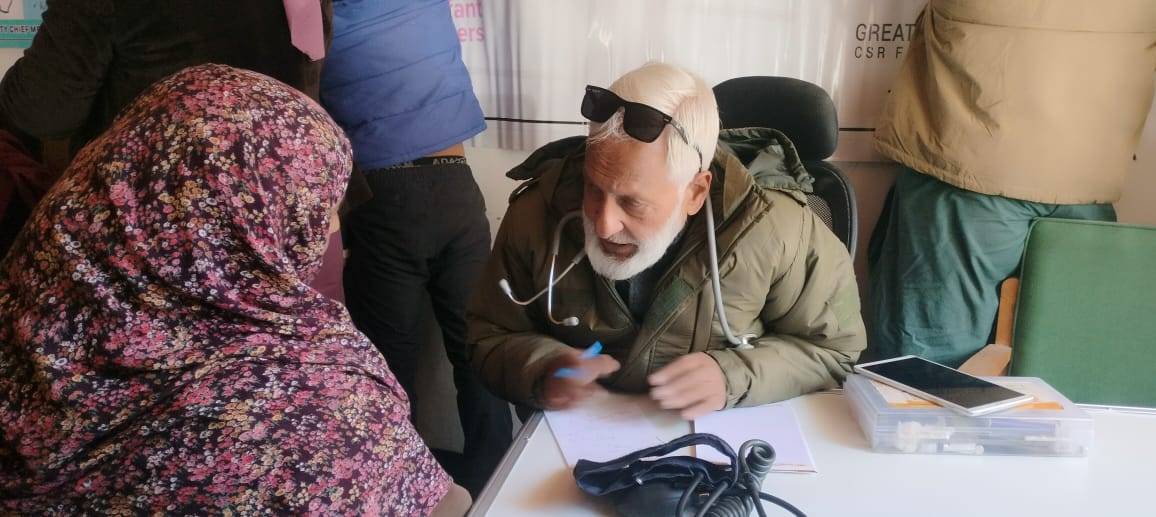
With this approach, we are well on track and have covered the entire block by the end of November 2025.
- The team consisted of:
- Dr Abdul Majid Ganai, Senior Consultant in Preventive and Community Medicine
- Dr Tawheeda, Specialist in mental health and family counselling
- Dr Begum Amara Jahan, Specialist in Obstetrics& Gynecology and family medicine. ( She joined the first camp in Drass, and felt sick due to the intense cold, she developed respiratory problems and tachycardia due to which she had to be sent back. She has now requested that she be considered for the next round of camps next summer)
- Ghulam Mehdi. Senior Project Manager from EIM.
- Mohammed Abbas, Block NutritionManager for EIM
- Shaukat Ali, Block NutritionManager for EIM
Apart from these, the government’s BMO (Block Medical Officer) would send at least four staff from the government to join the camp every day. These were from different cadres, ranging from Asha workers to pharmacist and community health workers, and sometimes even a nurse would join.
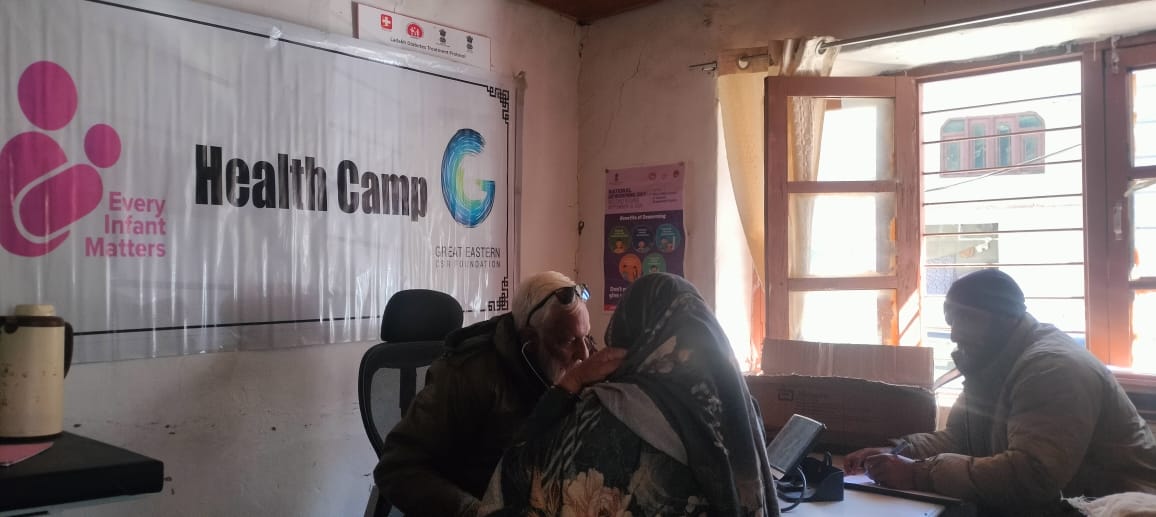
69 villages covered, out of which 27 were designated villages, and 42 were unnamed clusters or mohallas on remote mountains.
Activities in the camp
- Medical care
- Primary care – this is biggest gap in medical services there as there is no doctor to take care of day to day problems.
- Physical Health Screening
- Mental Health Screening
- Psychological Counselling
- Diagnosis and treatment for Non communicable diseases such as heart disease and high Blood pressure
- Women’s Health checkup,
- Psychological support
- Anemia among adolescent girls
- Child growth monitoring, to Identify: Underweight Children
- Haemoglobin testing to test for anaemia using a non-invasive haemoglobinometer
- Prescription for every medical problem detected
- Medicines given for at least two weeks
- Counselling and treatment of other common diseases such as gastritis, constipation, piles, breathing difficulties due to asthma, backache etc
- Teleconsultationsintegrated with Health Camps. Teleconsultation was carried out while the camps are going on and even after the camps, with specialists from Delhi to cover the following specialities
- Orthopaedic problems
- Respiratory problems
- Paediatric problems
- Obstetrics and gyne issues
- Training of Govt. Healthcare Workers by rotation
- We detected many life-threatening diseases. Many people were diagnosed for the first time. For example, there was a lady 73 year old, who had got her blood pressure checked for the first time in her life. Her BP was was 200/152. She could have suffered a stroke, cerebral haemorrhage, or heart attack at any time and lost her life.
- Three brothers from a village in Drass were found to have a mental disorder called SCHIZOPHRENIA . They were give counselling on the spot and were advised to attend a renowned psychiatrist at Srinagar, Professor Mushtaq Marghoob for further psychiatric management . This was facilitated by the Mental Health Team of our NGO At many other occasions , the necessary help during the referral and advanced consultation is also facilitated by our health workers. In id November 2025 they had a consultation with the doctor at Srinagar and antipsychotic medicines started. His appointment takes 6 months but Dr Tauheeda got it for them within days.
- 15 children with autism were detected for the first time. These children were treated very harshly by parents and siblings, they were delayed to be mad, lazy, and careless and irresponsible. This was because the parents had no knowledge of autism, nor did know how to treat these children with compassion. We carried out counselling and family support for caregivers.
- Patients with high blood pressure, asthma, heart disease who had previously been seen by a doctor, were found to have had no follow-up consultations for years. One patient had his BP checked 4 years back.

Follow up of the camps : Ensuring continuum of care:
We believe that follow-up after camps is of paramount importance. Follow up and the type of follow up needed is decided by the patients requirement, in one or more of the following ways:
- Personalised care & follow up by the EIM staff, the BNMs
- OPD treatment continues in government set-up, in DH or by Block Medical Officers
- Relevant tests (blood test and X-rays)
- Admission for very sick patients in DH
- Referral to govt hospital Jammu and Baramullah ( Critically sick patients sent for advanced testing and treatment by specialists)
- Individual long term free care of every sick patient by team specialists covering both physical and mental illness
- Teleconsultation by specialists from Delhi NCR and Srinagar.